Freelancer Merchant Accounts: API Flexibility Meets Mobile Instant Settlements and Variable Pricing with Layered Fraud Controls
Theo Brooks · Sep 12, 2026

Freelancer Merchant Accounts: API Flexibility Meets Mobile Instant Settlements and Variable Pricing with Layered Fraud Controls
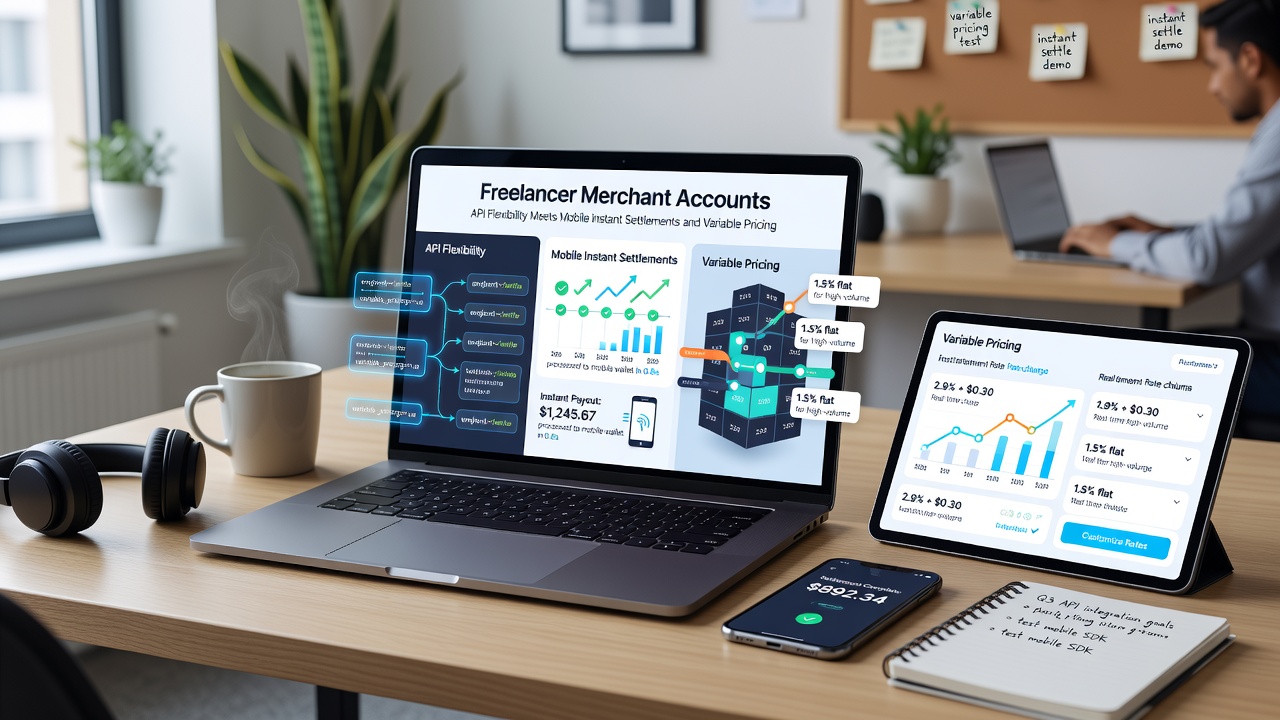
Freelancer merchant accounts have evolved to combine API-driven customization with mobile instant settlements, variable pricing models, and multi-layered fraud controls that address the specific needs of independent professionals handling project-based income streams. These accounts allow developers and service providers to integrate payment processing directly into their own platforms without relying on rigid templates, which means custom checkout flows and automated invoicing become standard rather than exceptions. Data from payment industry analyses show that such flexibility reduces integration time for many users by enabling direct calls to endpoints for transaction initiation, status checks, and refund processing.
API flexibility stands at the core of these systems because it supports hooks that connect with project management tools, client portals, and accounting software in real time. Observers note that freelancers who maintain multiple client relationships benefit when APIs permit variable fee structures to be applied per transaction or per client tier, adjusting automatically based on contract parameters. This approach avoids the one-size-fits-all pricing that once forced users into fixed percentages regardless of transaction volume or risk profile.
Mobile Instant Settlements in Practice
Mobile instant settlements deliver funds to linked accounts within minutes rather than the traditional two-to-three business day window, a shift driven by advances in real-time payment rails adopted across several regions. Research indicates that settlement speed matters most to freelancers whose cash flow depends on quick access after project milestones are met. The process typically involves a mobile app that confirms receipt, applies any applicable fees from the variable pricing schedule, and releases net amounts while maintaining a detailed audit trail accessible on the same device.
Variable pricing layers add another dimension because rates can fluctuate based on factors such as transaction size, client geography, or historical performance metrics. Those who've implemented these accounts report that the system recalculates fees dynamically at the point of authorization, which keeps overall costs aligned with actual usage patterns instead of locking users into static brackets. Industry reports compiled through 2025 and into September 2026 document a measurable uptick in adoption among creative professionals and consultants who previously managed payments through personal accounts or third-party invoicing platforms.
Layered Fraud Controls and Security Architecture
Layered fraud controls operate through sequential verification stages that include device fingerprinting, behavioral analytics, velocity monitoring, and optional manual review triggers. Each layer activates only when preceding signals exceed predefined thresholds, which minimizes false positives while still catching anomalous patterns. Experts have documented that this modular design allows freelancers to maintain high transaction throughput during peak client seasons without triggering unnecessary holds.
Integration between these controls and the mobile settlement function occurs through the same API framework, so a flagged transaction can pause settlement until cleared or escalated. According to data released by the Bank for International Settlements, real-time monitoring capabilities have expanded across multiple jurisdictions, supporting the infrastructure required for instant settlement features. In parallel, a study from the University of Toronto's Rotman School of Management examined how variable pricing combined with adaptive fraud scoring affects overall platform stability, noting measurable reductions in chargeback rates when controls scale with transaction risk.
Implementation Patterns Across Freelance Sectors
Take one graphic designer who noticed that embedding API calls into client proposal software allowed automatic generation of payment links with embedded pricing variables; the same workflow then routes cleared funds through instant settlement while fraud layers run in the background. Another case involves a freelance software consultant whose account applies different rates for domestic versus international clients, with the API handling currency conversion and compliance checks before settlement completes on the mobile dashboard.
Observers note that these accounts often include reporting dashboards that aggregate data across all layers, giving users visibility into fee calculations, settlement times, and any fraud flags without requiring separate logins. The architecture supports both low-volume users and those managing dozens of transactions weekly, because the variable pricing engine recalibrates automatically and the fraud system learns from each cleared batch.
Regulatory and Infrastructure Developments Through 2026
By September 2026 several payment networks had expanded support for same-day settlement APIs, aligning with updates from regulatory bodies that emphasize consumer protection alongside operational efficiency. These changes created clearer pathways for freelancers operating across borders, where variable pricing must accommodate differing tax treatments and currency rules. Figures from the European Payments Council reveal continued growth in API usage among independent contractors, particularly those integrating mobile tools with existing business software stacks.
The combination of features does not eliminate all operational complexities, yet it does provide a unified interface where API calls, mobile confirmations, pricing adjustments, and fraud reviews coexist within a single workflow. Researchers have observed that this convergence reduces the number of separate service providers many freelancers previously needed to coordinate.
Conclusion
Freelancer merchant accounts that blend API flexibility, mobile instant settlements, variable pricing, and layered fraud controls represent a consolidated approach to payment management for independent professionals. The systems rely on interconnected components that respond to transaction characteristics in real time, supported by infrastructure developments tracked through September 2026. Data from multiple sources confirm increasing integration across freelance sectors, driven by the practical advantages of unified processing rather than fragmented solutions.